Panamedia | Digital Marketing Agency in Dubai


Panamedia | Digital Marketing Agency in Dubai
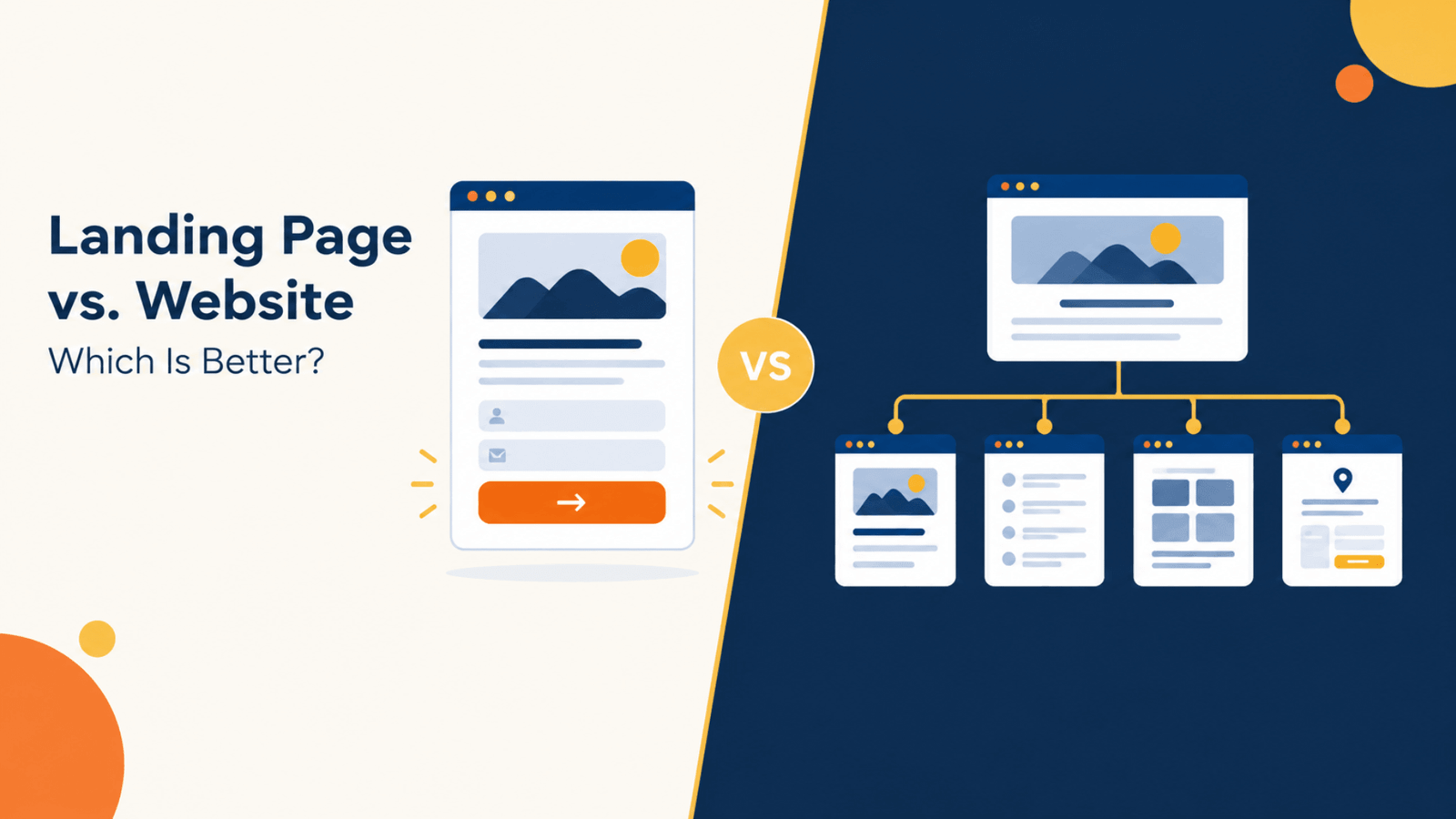
Quick answer: Neither is better. They do different jobs. A landing page is a single page built to drive one action, such as a quote request, a booking, or a WhatsApp message, usually from a specific ad or campaign. A website is a multi-page home for your business that explains who you are, what you offer, and why people should trust you. Most UAE businesses need both: a website as the foundation, and landing pages for ads and campaigns. If you can only build one first, build the website, unless you’re launching a single offer with paid ads and need to move fast.
If you’re asking this question, you’re probably deciding where to spend a limited budget, or wondering why your ads aren’t turning into enquiries. The answer depends less on which is “better” and more on where your visitors come from and what you want them to do next.
Landing page | Website | |
Main job | Get one action from one audience | Explain your whole business and build trust |
Pages | One | Many (home, services, about, contact, blog) |
Navigation | Little or none, so visitors stay focused | Full menu so visitors can explore |
Best traffic source | Ads, email, social campaigns, QR codes | Search, referrals, brand searches, direct visits |
Role in SEO | Usually limited, since it’s built for a campaign | Central: builds long-term search visibility |
Time and cost | Faster and usually cheaper | Takes longer and costs more |
Best for | Offers, launches, seasonal campaigns, lead generation | Credibility, being found, several services, e-commerce |
A landing page is a standalone page that someone “lands” on after clicking a specific link, such as a Google ad, an Instagram post, an email, or a QR code. It has one message and one call to action: “Get a free quote,” “Book a consultation,” or “Chat on WhatsApp.” It usually has no menu and few distractions, because every extra link is a way for the visitor to leave without acting.
A website is your business’s full online presence. It tells your story, lists your services, shows your work, answers questions, and gives people several ways to get in touch. It’s also where search engines learn what your business does, which is why it matters for being found on Google and in AI-generated answers.
A landing page is usually the better tool when:
A website is usually the better foundation when:
They work best as a pair. Your website builds trust and attracts people who are searching. Your landing pages convert people who clicked on a specific ad or campaign. When a landing page and a website work together, ad visitors get a focused page, while anyone who wants to check you out can click through to the full site.
Sending all your ad traffic to your homepage is one of the most common mistakes we see. A homepage has to speak to everyone, so it rarely speaks directly to the person who just clicked an ad about one service.
A few local details make a difference to how either one performs:
Usually not by themselves. A landing page built for one ad campaign is designed to convert, not to rank, and it often has little content. A landing page can rank for a specific search if it has enough genuinely useful information, but your main search visibility comes from your website’s service pages and articles. Remember that SEO takes time, so use landing pages for fast action and your website for long-term growth.
If you answer “ads, one offer, quick launch,” start with a landing page. If you answer “search, trust, several services,” start with a website. If it’s a mix, which it usually is, plan for both.
If you’re not sure what your business needs, our team can look at your goals, your traffic sources, and your budget and recommend the right starting point. See our landing page creation service and website design and development, or explore our digital advertising services if you’re planning paid campaigns. For budgeting, our guide to digital marketing costs in Dubai gives realistic ranges. When you’re ready, get in touch here to request a free marketing audit.
Neither is better in every case. A landing page is better for converting visitors from a specific ad or campaign, and a website is better for building trust, being found in search, and presenting your whole business. Most businesses need both.
You can, especially when you’re launching or testing an offer. But a single page can’t carry your full story, services, or credibility, and it won’t build much search visibility, so most businesses add a website as they grow.
Usually a landing page that matches the ad. A page built around one message tends to guide visitors toward one action more clearly than a homepage, which has to speak to everyone.
Start with one for each service or offer you advertise, and add more as you run different campaigns. Don’t create separate pages unless the audience or offer is genuinely different.
Not usually. Landing pages built for ads have little content and aren’t designed to rank. Your website’s service pages and articles do most of the SEO work, though a well-written landing page can rank for a specific search.
Yes. A landing page can sit on your own domain, which keeps your branding consistent and lets visitors click through to the rest of your site if they want to learn more.