Panamedia | Digital Marketing Agency in Dubai


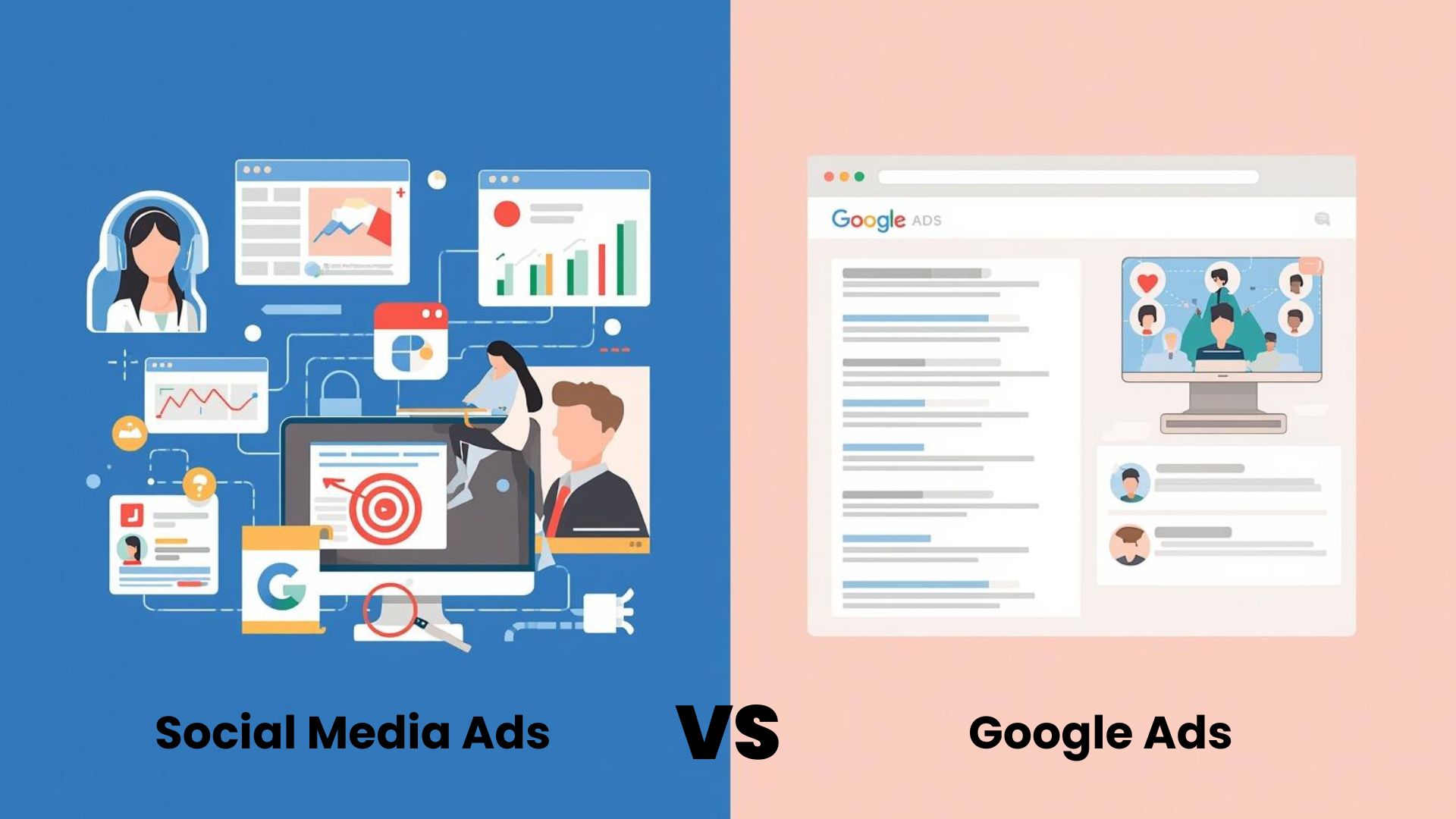
Social Media Ads vs. Google Ads?

Social Media Advertising vs. Google Ads: Which Delivers Better ROI for UAE Businesses in 2026?

The debate between Google Ads and social media advertising is more relevant than ever for UAE businesses in 2026. With AI reshaping how users discover and buy, and with ad costs rising on both Meta and Google, choosing the wrong channel — or ignoring one entirely — can cost you significantly in wasted budget.

In the UAE, where smartphone penetration exceeds 98% and platforms like Instagram, TikTok, and LinkedIn command daily attention, the stakes are particularly high. This guide breaks down exactly how each platform performs, what it costs in the UAE market, and when to use each — so you can allocate your budget with confidence.

If you’re also evaluating which agency should manage your campaigns, see how our social media agency in Dubai approaches paid social strategy.

Understanding the Core Difference

Audience Intent

Google Ads: Users come with high intent. They’re typing queries like “best CRM for small business,” “dentist near me,” or “buy running shoes online”. This is why paid search remains one of the most reliable acquisition methods, especially for lead generation and e-commerce.

Social Media Advertising (Meta, TikTok, Instagram, LinkedIn): People aren’t actively searching—they’re scrolling. Ads appear based on demographics, behavior, interests, and algorithmic predictions. This makes paid social perfect for building visibility, growing communities, and shaping brand perception.

How Does This Impact Ad Performance?

  • Google Ads → high-intent = higher conversion rates
  • Social Ads → interest-based = stronger awareness and engagement

Google attracts people who are ready to act, while social platforms help create demand among users who have not yet searched.

What Makes Google Ads Effective in 2026?

High-Intent Traffic

Google remains unmatched in capturing users who are already comparing options or ready to purchase. This environment is ideal for:

  • Direct-response campaigns
  • Local advertising
  • B2B lead generation
  • High-ticket services
  • E-commerce conversions

Google Shopping Ads, YouTube Ads, and Search campaigns all contribute to fast, measurable results.

In the UAE specifically, Google Search captures high volumes of transactional queries in English and Arabic — from “best CRM software Dubai” to “dentist JLT.” For businesses in competitive verticals like real estate, healthcare, and legal services, paid search often delivers the lowest cost-per-acquisition available. Our digital marketing team in Dubai regularly sees Google Search CPA running 30–50% lower than equivalent Meta campaigns for these industries.

Precision Targeting & ROI Tracking

Google Ads’ strength lies in its data and structure:

  • Keyword intent, match types, negative keywords
  • Audience segmentation (in-market, affinity, remarketing)
  • Quality Score, Ad Rank, and landing page experience
  • Measurable conversion tracking through GA4, Enhanced Conversions

Marketers appreciate the predictability of CPC, CPA, and ROAS on search.

AI, Automation & Smart Bidding

Google’s ad strategies for 2026 are heavily influenced by the following:

Google’s algorithms now optimize ads in real time based on user behavior, device signals, and intent levels, leading to better cost efficiency—one reason budgets continue to rise on the platform.

What Makes Social Media Advertising Effective in 2026

Awareness, Reach & Engagement

Social platforms dominate the upper funnel:

  • Brand awareness
  • Long-term community building
  • Repeat visibility through high-frequency placements.

Reels, Stories, TikTok Shorts, and interactive formats help brands stay memorable.

Demographic, Interest & Behavioral Targeting

Meta Advantage+ campaigns, TikTok’s behavior-based algorithm, and LinkedIn’s professional targeting let advertisers reach people with:

  • Specific interests
  • Skills and industries
  • Lifestyle behaviors
  • Lookalike audiences based on first-party data.

Social media excels at creating demand before users are ready to buy.

Powerful Visual Formats

Short-form video is the king of 2026. Brands rely on:

  • Reels
  • TikTok-style videos
  • Carousels
  • Live shopping ads
  • AR filters

UGC (User-Generated Content) drives higher engagement and scroll-stop rates, making social ads more emotionally impactful.

Cost, Performance & ROI Comparison

Cost Differences in 2026

CPCs have risen on both platforms, but the cost structure differs:

  • Google Ads: Higher CPC but stronger purchase intent
  • Meta/TikTok: Lower CPC and CPM for broad reach
  • LinkedIn Ads: Higher CPM but stronger B2B quality

Performance Expectations

  • Google Ads → immediate results & high conversion rates
  • Social Media Ads → long-term loyalty, remarketing advantages, and strong top-funnel performance

A hybrid strategy balances speed and scalability.

Attribution Challenges

Multi-touch attribution is essential in 2026:

  • People discover on TikTok
  • Research on Google
  • Get retargeted on Instagram.
  • Convert through a PMax campaign.

This makes cross-platform tracking and unified KPIs essential.

When Does Google Ads Work Best?

Google Ads is the go-to for:

  • Immediate sales or inquiries
  • Time-sensitive offers
  • Lead generation in high-intent markets
  • B2B SaaS and specialized services
  • Local search (“near me”) campaigns
  • E-commerce users are ready to buy

If your product solves a problem users are actively searching for, paid search wins almost every time.

When Social Media Ads Work Best?

Social platforms shine for:

  • New brands and early-stage startups
  • Lifestyle, fashion, beauty, food & entertainment
  • Community building
  • Product storytelling
  • Launches of visually appealing products
  • Brands needing high engagement

In the UAE, social platforms carry an additional advantage: the bilingual, multicultural audience. A well-structured Meta campaign with Arabic and English creative variants consistently outperforms single-language campaigns by 30–45%. TikTok in particular has seen explosive adoption among 18–35-year-olds in Dubai and Abu Dhabi, making it ideal for lifestyle, food & beverage, and fashion brands. Learn more about TikTok advertising trends in the UAE and how to structure winning campaigns.

The Winning Approach in 2026: Using Both Together

Why a Combined Strategy Performs Strongest

A hybrid strategy remains unbeatable:

  • Google captures intent
  • Social media builds demand.
  • Retargeting nurtures users
  • Cross-platform touchpoints increase conversion rate.s

This creates a full-funnel journey: Awareness → Consideration → Conversion → Retention

UAE-Specific Budget Benchmarks

UAE Ad Spend Benchmarks for 2026

Understanding realistic costs helps you plan your budget before launching. Here’s what UAE businesses typically spend and achieve across both platforms:

Google Ads — UAE Averages:

  • Search CPC: AED 8–35 depending on industry (legal and medical are highest)
  • Shopping CPC: AED 2–8 for e-commerce
  • Monthly minimum for meaningful data: AED 5,000–8,000

Meta Ads (Facebook + Instagram) — UAE Averages:

  • CPM: AED 25–60
  • CPC: AED 1.50–6
  • Cost per lead (lead gen forms): AED 40–150 depending on niche

TikTok Ads — UAE Averages:

  • CPM: AED 15–40 (lower than Meta)
  • Ideal for awareness campaigns with AED 3,000+ monthly budgets

These benchmarks are based on campaign data from UAE clients across retail, real estate, and healthcare sectors. Results vary significantly based on creative quality, landing page experience, and targeting precision.

Conclusion

There’s no single winner in the Google Ads vs social media debate for UAE businesses — but there is a smarter way to think about it.

Use Google when your customers are actively searching. Use social media when you need to reach them before they search. Use both together when you want to dominate your market from awareness to conversion.

If you’re unsure which mix suits your business goals and budget, Panamedia’s paid media team in Dubai can audit your current campaigns and recommend an evidence-based strategy — at no cost.